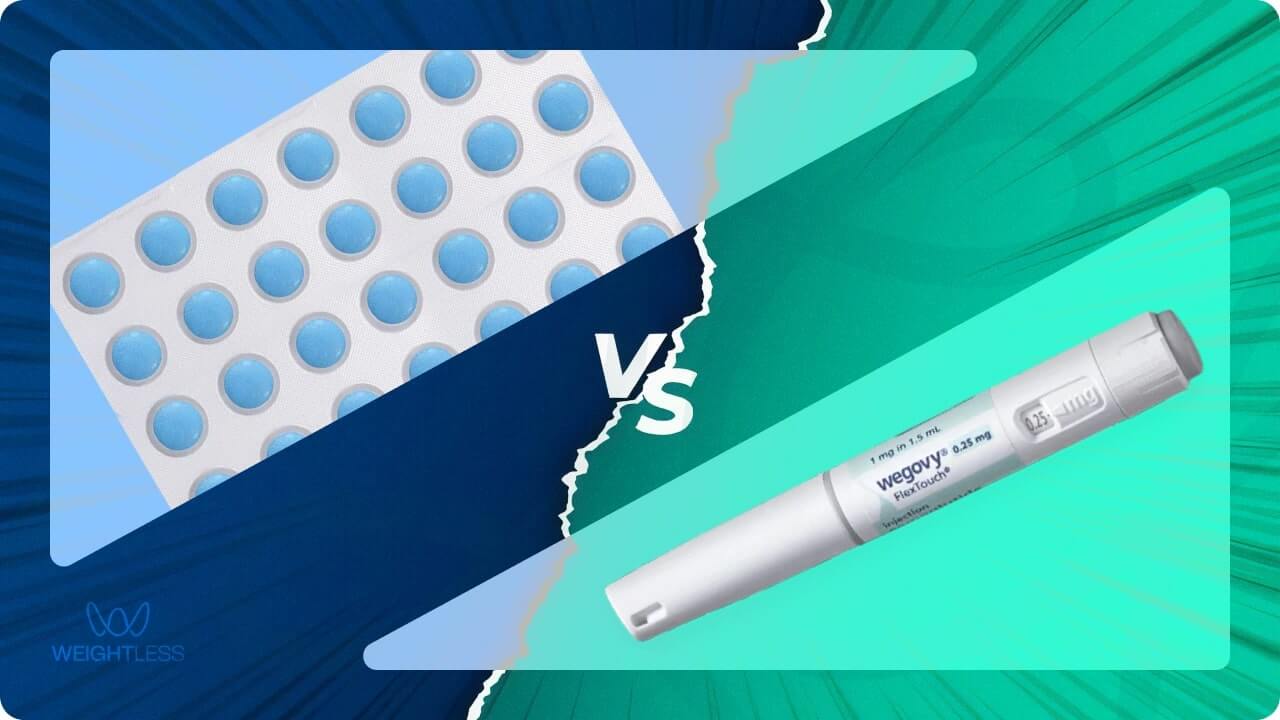
As the weight gain epidemic takes over the world, people are turning to new and advanced methods for weight loss. Two of the most frequently used medical options include Wegovy, a once-weekly GLP-1 injection, and Mysimba, an oral tablet that targets appetite and cravings. While both can help with weight management, they work in very different ways, vary in effectiveness, and come with unique considerations.
In this guide, discover more about Wegovy and Mysimba and compare them in terms of results, cost, safety, and suitability to help you decide which may be the better option for you.
What Are Mysimba and Wegovy?
Mysimba is a prescription weight loss medication that combines naltrexone and bupropion in a single oral tablet. It is approved in the UK for the treatment of obesity and works by influencing the brain’s reward and appetite pathways, helping to reduce food cravings and improve portion control.
Wegovy contains semaglutide, a GLP-1 receptor agonist given as a self-administered once-weekly injection. It mimics natural gut hormones to slow digestion and suppress appetite, leading to significant and sustained weight loss in clinical trials.
Although both are prescription weight loss options in the UK, Mysimba and Wegovy belong to very different drug classes, use distinct mechanisms of action, and come in different delivery forms.
Both have similar aims, such as reducing appetite and supporting long-term weight loss, but their effectiveness and suitability can vary depending on individual needs.
How They Work in the Body
It is important to understand the mechanisms of these two medications before deciding which one suits your weight loss journey best.
Mysimba works by targeting the brain’s reward and appetite pathways. Its two active ingredients are bupropion and naltrexone. They act on the dopamine and opioid systems, which play a role in food cravings and the “reward” feeling from eating. This makes Mysimba particularly effective at reducing emotional or habitual eating and helping people cut down on snacking.
Wegovy, which contains semaglutide, is a GLP-1 receptor agonist shown in clinical trials to deliver significant and sustained weight loss. It works by mimicking the natural GLP-1 hormone. This slows gastric emptying and enhances insulin response, which directly affects hunger signals in the brain. As a result, Wegovy makes you feel fuller sooner and for longer after meals, leading to reduced calorie intake.
In short, Mysimba primarily reduces food cravings, while Wegovy focuses on appetite suppression and feelings of fullness. Both approaches can aid weight loss, but their effectiveness may depend on the type of eating behaviour you struggle with most.
Effectiveness & Weight Loss Results: Mysimba vs Wegovy
When comparing Wegovy vs Mysimba weight loss, clinical trial data show a clear difference in average outcomes.
Wegovy:
In STEP clinical trials, patients using Wegovy achieved an average weight loss of around 15% of body weight over 68 weeks, with one-third losing 20% or more.
Mysimba:
European clinical trials have reported average weight loss of around 5–10% of body weight over a year. While results are generally more modest than with Wegovy, some patients find it highly effective, especially for controlling food cravings and emotional eating.
Overall, when it comes down to the common question of ‘Wegovy vs Mysimba effectiveness’, Wegovy tends to deliver more consistent and significant results.
However, individual responses vary, and some users tolerate one treatment much better than the other. For this reason, both medications remain valuable prescription options in the UK, depending on your health profile, goals, and preferences.
Wegovy vs Mysimba Cost in the UK
Wegovy:
- Prices typically range from £150 to £300 per month in the UK, depending on the dosage and provider.
- Lower starter doses are less expensive, while higher maintenance doses cost more.
- Online clinics may also charge additional fees for consultations and repeat prescriptions.
- NHS access: Wegovy is available on the NHS in the UK for eligible patients who meet strict criteria, such as those with a BMI of ≥35 with weight-related health problems or ≥30 in certain cases. NICE guidance recommends Wegovy use within specialist weight management services and for a maximum of two years
Mysimba:
- Generally costs around £90 to £120 per month in the UK for a month’s supply of tablets.
- Costs can vary slightly depending on the pharmacy or online clinic used.
- NHS access: Mysimba can be prescribed through Tier 3 specialist weight management services in the UK, but availability is limited and usually requires a specialist referral. NICE recognises Mysimba as an option, though uptake is far lower compared to Wegovy.
When comparing prices, it’s also worth factoring in follow-up appointments, prescription renewals, and whether you’re using an online weight loss clinic or a local service. Privately, Mysimba is usually the more affordable option, while Wegovy is more expensive but has stronger evidence of effectiveness. NHS access to both remains strictly controlled under NICE guidance, and most patients will only be eligible after referral to a specialist service.
Mysimba vs Wegovy Side Effects: Which Is Easier to Tolerate?
Like all prescription weight loss medications, both Mysimba and Wegovy can cause side effects, though the type and severity may differ from person to person.
- Shared side effects can include nausea, headaches, and digestive upset (such as bloating or diarrhoea), particularly in the first few weeks as the body adjusts.
- Mysimba side effects are more commonly linked with insomnia, anxiety, dry mouth, dizziness, and increased blood pressure. Because Mysimba works on the brain’s reward pathways, some users also report mood changes. Rarely, it can trigger seizures, so it is unsuitable for people with a seizure history.
- Wegovy Side effects can include more gastrointestinal issues, including constipation, vomiting, abdominal pain, and indigestion. In rare cases, Wegovy has been associated with thyroid-related concerns, pancreatitis, or gallbladder problems.
To answer ‘Wegovy vs Mysimba tolerability’, user experiences vary widely. Some people find Mysimba’s stimulant-like effects, like insomnia or jitteriness, difficult, while others struggle with Wegovy’s gut-related side effects.
Ultimately, the best option depends on which side effect profile is easier for you to manage alongside your weight loss goals.
Suitability: Who Should Consider Which?
Choosing between Mysimba and Wegovy depends on your health profile, preferences, and weight loss goals.
Mysimba:
It may be better suited for people who prefer a pill-based approach rather than injections. It can be useful for those who struggle most with food cravings or emotional eating, and who want to avoid the gastrointestinal side effects often linked with GLP-1 injections.
However, because Mysimba can influence mood and blood pressure, it may not be suitable for those with mental health conditions, a seizure history, or uncontrolled hypertension.
Wegovy:
Often recommended for patients who need more significant and sustained weight loss, especially those with obesity-related health conditions such as type 2 diabetes, high blood pressure, or sleep apnoea.
It is generally more effective than Mysimba, but requires a weekly injection and may cause stomach-related side effects.
No matter which option is considered, a doctor’s consultation is essential. Your GP or weight management specialist can help assess which treatment is safer and more effective for your needs, and whether you meet NHS eligibility criteria in the UK.
FAQs
Is Wegovy better than Mysimba for weight loss?
Clinical trials show that Wegovy typically leads to greater weight loss compared to Mysimba. However, effectiveness can vary depending on individual health profiles and eating behaviours.
Which has fewer side effects: Wegovy or Mysimba?
Both have side effects, but they differ in type. Wegovy side effects are mostly gastrointestinal (nausea, constipation, vomiting), while Mysimba side effects can include insomnia, anxiety, increased blood pressure, or mood changes. Tolerability depends on the individual.
Can I take Mysimba if I’ve used Wegovy before?
In most cases, you would not take them together. If Wegovy isn’t suitable or tolerated, a doctor may consider switching you to Mysimba. Always consult your prescribing clinician before making any change.
How long do these treatments last?
Both Wegovy and Mysimba are intended for long-term weight management rather than short-term use. Treatment is typically continued as long as it remains safe, effective, and beneficial, with regular reviews by your doctor.
Are these available on the NHS?
Wegovy is available under strict criteria for patients with obesity and weight-related health conditions through specialist NHS services. Mysimba can be prescribed through Tier 3 weight management services, but access is more limited.
Key takeaways
- Wegovy has been shown in trials to deliver greater weight loss (15% or more of body weight) compared with Mysimba (around 5–10%).
- Mysimba works mainly on food cravings and emotional eating, while Wegovy focuses on reducing hunger and increasing fullness.
- Wegovy is usually more expensive privately (£150–£300/month) compared to Mysimba (£90–£120/month), though NHS access is possible for both under strict criteria.
- Some people tolerate Mysimba better, while others find Wegovy easier, as side effects differ widely between the two.
- Mysimba may suit those who prefer tablets or who want to avoid gastrointestinal issues; Wegovy is often chosen for those needing more significant weight loss or with obesity-related conditions.
- The right choice depends on individual health history, weight loss goals, and budget, and should always be made with medical guidance.
Disclaimer: At Weightless, we strive to provide accurate, up-to-date health information that is carefully reviewed by medical professionals. However, the content on this blog is intended for general knowledge only and should not be considered a substitute for medical advice, diagnosis, or treatment. Always speak with a qualified healthcare professional about any questions or concerns you may have regarding your health. Information here should not be used to make decisions about your personal care without professional guidance.
Sources:
https://www.ema.europa.eu/en/documents/overview/mysimba-epar-summary-public_en.pdf
https://pmc.ncbi.nlm.nih.gov/articles/PMC9738168
https://www.nejm.org/doi/full/10.1056/NEJMoa2032183
https://pmc.ncbi.nlm.nih.gov/articles/PMC8251561/
You may also be interested in: