Mounjaro is a medication used to treat type 2 diabetes and aid weight loss. The most commonly asked question from users is “When is the right time to increase my Mounjaro dose?” In most injectable medications, dosing typically starts low and increases gradually to help your body adjust and minimise side effects.
Understanding the timing and reasons for dose escalation is important for achieving the best results safely. Discover more about when to consider a dosage increase, how the titration schedule works, and what to discuss with your healthcare provider in this guide.
What is Mounjaro and How Does It Work?
Mounjaro is a medication designed to support weight loss and blood sugar control, particularly in people with type 2 diabetes. Its active ingredient, tirzepatide, is a dual GLP-1 and GIP receptor agonist, meaning it imitates the action of two important gut hormones.
By targeting both pathways, Mounjaro helps regulate insulin levels, suppress appetite, delay stomach emptying, and improve blood sugar balance. All of this contributes to effective and sustained weight loss. It is administered as a once-weekly injection under the skin.
Why do you have to increase Mounjaro dose
To start your treatment with Mounjaro, a low dose is recommended to ensure your body adjusts properly and also helps minimise nausea. Gradually increasing your dose over time encourages steady and safe weight loss. This also prevents early plateaus and improves long-term outcomes.
However, it is important to note that the dosing is subject to each person, and not everyone needs to reach the 15mg dose. To ensure the best treatment, personalised plans are very important.
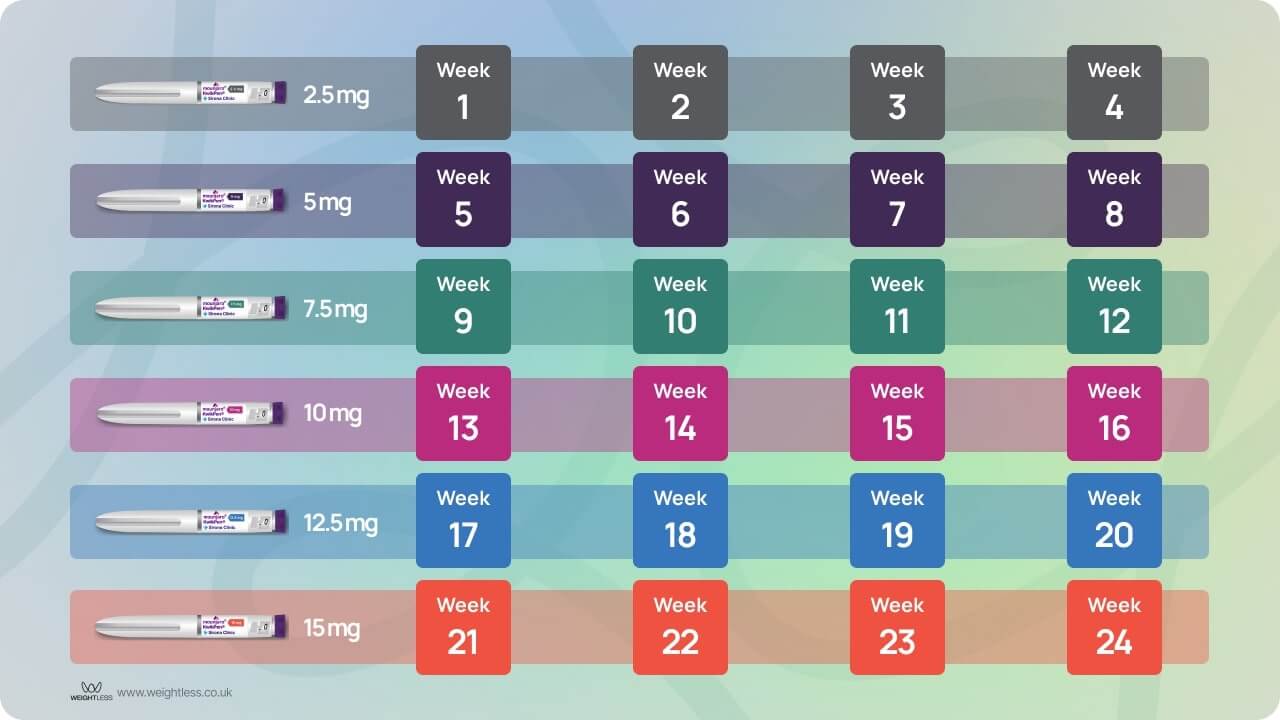
Mounjaro UK Dosing Schedule: Week-by-Week Plan
- Week 0–4: 2.5mg
- Week 4+: 5mg
- Week 8+: 7.5mg
- Week 12+: 10mg
- Week 16+: 12.5mg
- Week 20+: 15mg
This is only a sample timeline, your actual schedule may look different depending on how your body responds. It is important to create real schedules which are based on patient progress and tolerance for the best results.
Signs It’s Time to Increase Your Mounjaro Dose
If you’re wondering whether it might be time to increase your dose, here are some common signs patients notice before making the change. These signs may indicate that your current dose is inadequate:
- You're not losing weight despite sticking to the programme.
- Appetite or cravings are returning.
- Weight loss has stalled.
- You don’t feel any different after multiple weeks at your current dose.
If you feel like any of these symptoms are occurring, it is best to increase your dosage with the assistance of a medical professional.
How to Increase Your Dose Safely
Dose increases should always be made under medical supervision to keep the process safe and effective. You should remain on each dose for at least four weeks before moving up, giving your body time to adjust.
After every increase, keep an eye out for new or worsening side effects such as nausea or digestive discomfort. To support your body during this adjustment, focus on staying hydrated, eating protein-rich meals, and avoiding overeating once your appetite begins to return.
What Happens If You Increase Too Quickly?
Increasing your Mounjaro dose too quickly can lead to uncomfortable and disruptive side effects. Common issues include nausea, vomiting, diarrhoea, and fatigue, especially if your body hasn’t had enough time to adjust to the previous dose.
These side effects not only affect your quality of life but can also reduce your ability to stick with the treatment. While it might be tempting to move up the dose to speed up results, doing so can backfire.
It is important to realise that slower isn’t worse. Increasing your dose gradually isn’t about being slow, it’s about giving your body the best chance to adapt for long-term results.
Plateauing on Mounjaro: What to Do First
Hitting a weight loss plateau while on Mounjaro means that your progress has stalled or stopped. This may be a common occurrence, but it doesn't always mean the medication has stopped working. Before considering a dose increase, it’s important to take a step back and evaluate a few key factors:
- Check your habits: Have your diet or activity levels changed recently, even slightly? Small shifts in routine can affect progress.
- Notice your hunger cues: Are you snacking more often or feeling hungrier than usual? This could be a sign your body is adjusting to the current dose.
- Look at the bigger picture: Factors like stress, hormonal changes, and poor sleep can all interfere with weight loss, even when taking medication.
While increasing your dose might help break through a plateau, it’s not a guaranteed fix. Addressing lifestyle factors first often leads to better and more sustainable results, and ensures you're getting the most from each dose. Before deciding to change your dose, it is vital to contact a healthcare professional for sound advice.
Dose Adjustments Are Personalised
When it comes to Mounjaro, there’s no one-size-fits-all approach to dosing. While 15mg is the maximum dose, not everyone needs to reach it to see meaningful results.
Many patients experience significant weight loss at lower doses, such as 5mg or 10mg, especially when combined with healthy lifestyle habits. The right dose for you depends on how your body responds and how well you tolerate the medication.
Your healthcare provider or clinic will monitor your progress and side effects to decide if and when a dose increase is appropriate. It’s important to avoid self-adjusting your dose, as increasing too soon or too much can lead to unnecessary side effects and setbacks.
Expert Tips: Managing Side Effects During Dose Increases
As your Mounjaro dose increases, it's common to experience side effects like nausea or digestive discomfort. Fortunately, inculcating a few simple habits in your daily routine can make the transition smoother:
- Eat smaller, lighter meals and avoid fatty or spicy foods, which can trigger nausea.
- Stick to a consistent schedule. Take your injection at the same time each week to help your body adjust more predictably.
- Rotate injection sites, switching between the arm, thigh, or stomach can reduce discomfort or irritation at the injection site.
- Manage nausea naturally by consuming Ginger tea, dry crackers, or over-the-counter remedies (like anti-nausea tablets) as they may help relieve mild symptoms.
Side effects usually ease over time, but if they persist or worsen, speak with your healthcare provider before making any changes to your dose. Need Help Managing Side Effects? Speak With Your Clinic Today and Track Your Progress.
FAQS
How often should I increase my Mounjaro dose?
Mounjaro doses are typically increased every 4 weeks, but only if you're tolerating the current dose well and not experiencing significant side effects. Your healthcare provider will guide the timing based on your response and overall progress.
Can I stay on 2.5mg if it works for me?
Yes, if you're seeing positive results and managing well on 2.5mg, your provider may recommend staying at that dose. However, 2.5mg is often considered a starting dose, and many patients benefit from gradual increases for optimal results.
Is it dangerous to increase too fast?
Yes, increasing your dose too quickly can lead to intensified side effects, such as nausea, vomiting, and fatigue. This can make it harder to stay on the medication. Always follow your provider's guidance and avoid adjusting your dose on your own.
How do I know if I’ve hit a plateau?
You may have hit a plateau if your weight hasn’t changed for 3–4 weeks despite continuing your medication and healthy habits. It's important to check for changes in diet, activity, sleep, or stress before assuming it's a true medication plateau.
Can I go back to a lower dose if I feel unwell?
Yes, if side effects become difficult to manage, your provider may recommend temporarily reducing your dose. This allows your body more time to adjust before trying a higher dose again.
Will increasing the dose speed up weight loss?
Sometimes, but not always. A higher dose can enhance appetite control, but it's not a guaranteed way to accelerate weight loss. Lifestyle factors, metabolism, and consistency still play a major role in your overall progress.
Key takeaways
- Mounjaro helps with weight loss and blood sugar control by mimicking gut hormones.
- Doses are increased gradually, usually every 4 weeks, to reduce side effects.
- Many patients see results at lower doses; 15mg isn’t necessary for everyone.
- Only adjust your dose under medical supervision.
- Increasing too quickly can cause nausea, fatigue, and other side effects.
- If weight loss stalls, review your habits before changing the dose.
- Plateaus are normal and often improve with small lifestyle adjustments.
- Manage side effects by eating smaller meals, staying hydrated, and rotating injection sites.
- You can reduce your dose temporarily if side effects are too strong.
- Higher doses may help, but lifestyle consistency is key to long-term success.
Disclaimer: At Weightless, we strive to provide accurate, up-to-date health information that is carefully reviewed by medical professionals. However, the content on this blog is intended for general knowledge only and should not be considered a substitute for medical advice, diagnosis, or treatment. Always speak with a qualified healthcare professional about any questions or concerns you may have regarding your health. Information here should not be used to make decisions about your personal care without professional guidance.
Sources:
https://pubmed.ncbi.nlm.nih.gov/37084486/
https://pubmed.ncbi.nlm.nih.gov/35658024/
https://mounjaro.lilly.com/how-to-use-mounjaro
https://www.drugs.com/medical-answers/mounjaro-side-effects-you-need-aware-3576835/
You may also be interested in: