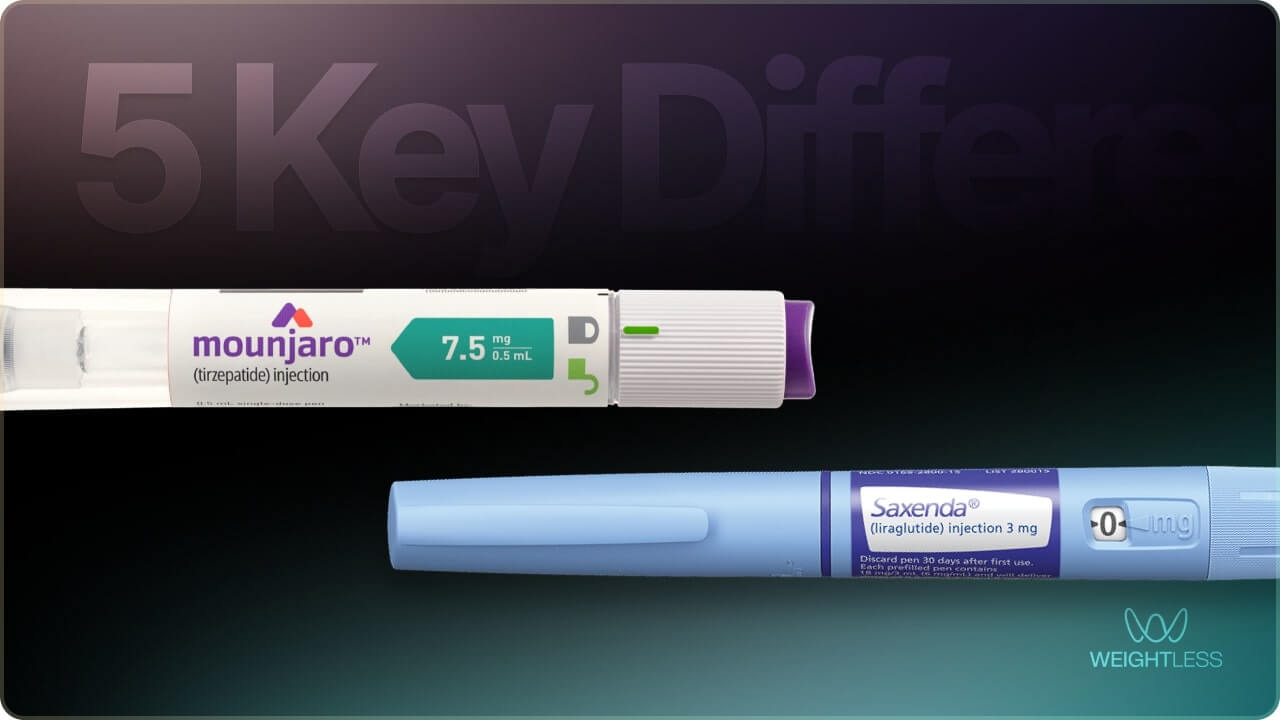
Mounjaro and Saxenda are both injectable medications that support weight management and are GLP-1 receptor agonists. However, Mounjaro goes a step further by targeting an additional hormone. These medications were originally developed to treat type 2 diabetes but gained widespread attention for their ability to promote significant weight loss in eligible patients.
With Mounjaro's recent rise in popularity, it is being compared to Saxenda to determine which option may be more effective for their needs. As public awareness of medical weight loss options grows, understanding the differences between these two treatments is vital.
In this article, discover more about the top 5 key differences between Mounjaro and Saxenda, which will help you make a more informed decision
Eligibility & NHS/FDA Approvals
Saxenda and Mounjaro are both injectable medications used for the same purpose, which is to aid weight loss, but their approvals, eligibility criteria, and availability differ significantly across the UK.
BMI criteria and health conditions
Saxenda UK:
It is approved for adults with a BMI ≥ 35 with at least one weight-related condition such as type 2 diabetes, high blood pressure, or high cholesterol. It is also approved for adolescents with obesity.
Mounjaro UK:
Mounjaro is currently approved for people with type 2 diabetes, and in the UK, its use for weight loss is mostly limited to those with high risk with a high BMI and multiple health conditions. Some private clinics may also prescribe it off-label to patients who don’t meet NHS criteria
Specific approvals
Mounjaro:
Mounjaro was originally developed and approved for type 2 diabetes management.
Its use for weight loss is more recent and currently limited in the UK to specialist pathways under strict NHS criteria.
Saxenda:
Saxenda is approved specifically for weight management, not for treating diabetes, but it is suitable for both diabetic and non-diabetic patients who meet the BMI thresholds.
NHS Access
Mounjaro UK:
Access for Mounjaro via the NHS is restricted and phased, and it is only prescribed through specialist weight management services with tight eligibility.
Saxenda UK:
NHS coverage for Saxenda exists but is limited and variable. It is more commonly prescribed through private clinics in the UK for patients meeting BMI and health criteria.
Regulatory Guidelines: NICE vs. FDA
FDA (USA):
- Saxenda: Approved for chronic weight management (adults + adolescents).
- Mounjaro: Approved for type 2 diabetes; recent approval for weight loss in obese patients.
NICE (UK):
- Saxenda: Recommended for limited NHS use, depending on BMI and comorbidities.
- Mounjaro: NICE approved for obesity in very high-risk patients only, with phased rollout from 2025–2026 via specialist NHS clinics.
Weight Loss Results: What Do Studies Say?
Clinical studies show a significant difference in weight loss outcomes between Mounjaro and Saxenda, particularly in non-diabetic populations. The SURMOUNT-1 trial, which evaluated Mounjaro in adults without diabetes, reported an average 20.9% reduction in body weight over 72 weeks at the highest dose. This is one of the most substantial weight loss results seen in a medication trial to date.
In comparison, Saxenda showed more modest results. In a 56-week clinical study involving patients with type 2 diabetes, participants lost an average of 8% of their body weight. While still clinically meaningful, Saxenda’s effect was significantly smaller and slower than Mounjaro’s.
Mounjaro's trials typically focus on non-diabetic individuals in weight-loss studies, while Saxenda's data often includes diabetic patients, who generally lose weight more slowly. This difference in study populations and treatment duration should be considered when comparing the two drugs directly.
Side Effects & Tolerability
Both Mounjaro and Saxenda commonly cause gastrointestinal side effects, particularly during the early stages of treatment or when doses are increased. Shared side effects include nausea, diarrhoea, fatigue, and occasionally low blood sugar, especially in people with type 2 diabetes who are also taking other glucose-lowering medications. These symptoms often improve over time as the body adjusts.
While both medications are generally well-tolerated under medical supervision, individual experiences can vary, and patients should report persistent or severe symptoms to their healthcare provider.
For personalised guidance, you can take an online quiz or speak with a specialist to understand which treatment may work best for you.
Dosage, Frequency & Ease of Use
Mounjaro:
- Dosage: Starts at 2.5 mg once weekly, typically increased gradually up to 15 mg depending on response and tolerance.
- Frequency: Once-weekly injection.
- Administration: Subcutaneous (under the skin) injection, usually in the stomach, thigh, or upper arm.
- Ease of Use:
- Highly rated for convenience due to the weekly schedule.
- Less interruption to the daily routine.
- Fewer injections may lead to better long-term adherence.
- Highly rated for convenience due to the weekly schedule.
Saxenda:
- Dosage: Starts at 0.6 mg daily, increased weekly until reaching the full dose of 3.0 mg daily.
- Frequency: Once-daily injection.
- Administration: Subcutaneous injection in the same areas as Mounjaro.
- Ease of Use:
- Requires daily self-injection, which some find inconvenient.
- Missed doses can affect effectiveness.
- More frequent handling of needles and pens may be a drawback for some users.
- Requires daily self-injection, which some find inconvenient.
Choosing the Right Option
Choosing between Mounjaro and Saxenda depends on your personal health goals, lifestyle, and medical background. If you're managing type 2 diabetes alongside weight concerns, Mounjaro may offer dual benefits, as it's approved for both conditions and has shown stronger weight loss results in clinical trials.
However, if your focus is strictly on weight loss and you're looking for a well-established option, Saxenda might be a suitable starting point, especially if you prefer working with private UK clinics that regularly prescribe it.
Convenience is another key factor, many patients prefer Mounjaro’s once-weekly injections over Saxenda’s daily routine, as it fits more easily into busy lives and reduces ‘needle fatigue’. Budget also plays a role, while both drugs can be costly privately, Mounjaro is increasingly viewed as more cost-effective and many online providers now offer monthly payment plans.
Finally, it is important to consider any previous experience with similar medications and any side effects you may have had. Some people tolerate one drug much better than the other. To make the most informed decision, it’s always best to speak to a healthcare provider or complete a free online assessment with a reputable clinic, which can help match you to the safest and most effective option based on your needs.
FAQs
Which is safer: Mounjaro or Saxenda?
Both medications are generally safe when prescribed and monitored by a healthcare professional. However, they have different mechanisms and side effect profiles. Mounjaro may carry a higher risk of gastrointestinal side effects, while Saxenda is more established with a longer track record.
Do both drugs work the same way?
Not exactly. Saxenda is a GLP-1 receptor agonist, while Mounjaro is a dual GIP and GLP-1 receptor agonist. This means Mounjaro targets two hormone pathways instead of one, which may contribute to greater weight loss in some people.
Can I switch from Saxenda to Mounjaro?
Yes, but only under medical supervision. Your doctor will assess your response to Saxenda, your health status, and guide a safe transition plan if Mounjaro is appropriate for you.
Is Mounjaro more expensive than Saxenda?
Typically, yes. Mounjaro tends to be more expensive than Saxenda, especially if paying out of pocket. Pricing can vary based on insurance coverage, region, and pharmacy discounts.
How long does it take to see results with either?
Some people begin to notice weight loss within a few weeks, but significant results usually take 2–3 months or longer. Mounjaro has shown faster and more substantial weight loss in clinical trials compared to Saxenda.
Are these available via the NHS?
Saxenda is available on the NHS for certain patients who meet specific criteria, while Mounjaro was recently approved for type 2 diabetes and may become available for weight management, but access through the NHS is currently limited and evolving.
Can I use these if I don’t have diabetes?
Yes, both medications are approved for weight loss in people without diabetes, under specific conditions. Saxenda is approved for weight management in non-diabetic individuals. Mounjaro is being studied and used off-label in some countries for weight loss in non-diabetics, but approval status can vary by region.
Key Takeaways:
- Mounjaro and Saxenda are both injectable weight loss medications, originally developed for type 2 diabetes but now used for weight management.
- Mounjaro targets both GIP and GLP-1 receptors, while Saxenda only targets GLP-1, which may explain Mounjaro’s stronger weight loss outcomes.
- Saxenda is approved for adults with a BMI ≥ 35 with weight-related conditions; it’s also approved for adolescents.
- Mounjaro is approved for type 2 diabetes, and in the UK, its use for weight loss is limited to high-risk patients with a BMI ≥ 35 or >27 in the presence of at least one weight- related comorbid condition (hypertension, elevated cholesterol, sleep apnoea, cardiovascular disease, pre diabetes or type 2 diabetes).
- NHS access to Mounjaro is very restricted, while Saxenda is more commonly prescribed through private UK clinics.
- Mounjaro showed up to 20.9% average weight loss in non-diabetic patients (SURMOUNT-1 trial); Saxenda showed around 8% in diabetic patients over a shorter study period.
- Both medications can cause side effects like nausea, diarrhoea, fatigue, and low blood sugar; Mounjaro may also cause sulphur burps and more GI issues during dose increases.
- Mounjaro is taken once weekly, making it more convenient and user-friendly than Saxenda, which requires daily injections.
- Patients often prefer Mounjaro for its ease of use, fewer injections, and stronger clinical results.
- Mounjaro’s popularity is rapidly growing, with higher user ratings and more online interest compared to Saxenda.
- Saxenda is typically more expensive per month and requires more frequent dosing, though both can be costly when purchased privately.
- Choosing the right treatment depends on individual goals, diabetes status, budget, dosing preference, and side effect tolerance.
- Consulting a healthcare professional or completing a free online assessment can help determine which option is best for you.
Disclaimer: At Weightless, we strive to provide accurate, up-to-date health information that is carefully reviewed by medical professionals. However, the content on this blog is intended for general knowledge only and should not be considered a substitute for medical advice, diagnosis, or treatment. Always speak with a qualified healthcare professional about any questions or concerns you may have regarding your health. Information here should not be used to make decisions about your personal care without professional guidance.
Sources:
https://pmc.ncbi.nlm.nih.gov/articles/PMC10714284/
https://www.medicines.org.uk/emc/files/pil.2313.pdf
https://pmc.ncbi.nlm.nih.gov/articles/PMC8251561/
You may also be interested in: